
First time in Kyrgyzstan: a practical guide
Entry rules, money, transport, altitude and the two weeks that make the best first itinerary.
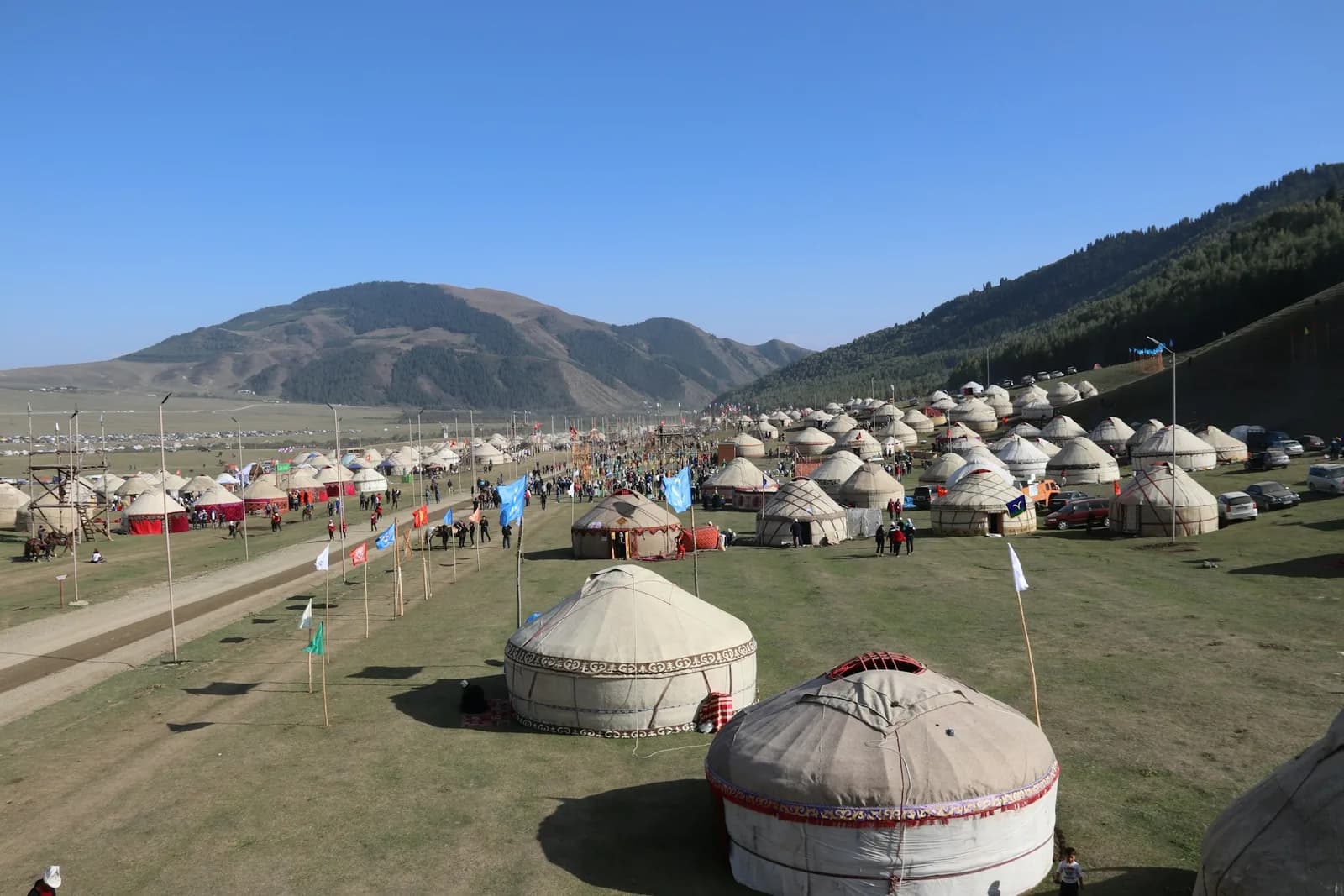
Kyrgyzstan is the easiest country in Central Asia to enter and the hardest to leave on schedule: the mountains take up 90% of the territory and every valley invites one more day.
It has no coastline and very little heavy industry, so the itinerary a first-time visitor builds is almost always the same shape, a capital city for logistics, one alpine lake, one trek, one horseback plateau, and the only real decision is how many of those four to fit into the time you have.
Entry and documents
Fifty-five nationalities enter without a visa for up to 30 days within a 60-day window, everyone else applies for an electronic visa in advance. Keep a printed copy of the visa and your accommodation booking, border officers still ask for paper.
Processing an e-visa normally takes a few working days, so apply at least a week before departure rather than the night before a flight. Land border crossings with China and Kazakhstan can close for weather or maintenance with little notice, so a flexible day either side of a planned crossing is worth building into the schedule.
Money and connectivity
The currency is the som. Cards work in Bishkek and Karakol, but the jailoo economy is cash. Buy a local SIM at the airport, coverage follows the main roads and stops at the passes.
ATMs are common in the capital and in Karakol but scarce beyond them, so withdraw enough som for several days before heading into the mountains. Small guesthouses and drivers rarely have change for large notes, and tipping is optional but appreciated for guides and horse handlers.
Getting around
Shared marshrutka vans link every town and are the cheapest way to move between regions, but they run on a "when full" schedule rather than a timetable. A hired driver or a rental 4x4 costs more but turns a full day of connections into a half-day, which matters most on the unpaved roads to Song-Kul and Sary-Chelek.
Domestic flights connect Bishkek with Osh in under an hour and are worth considering if the itinerary covers both the north and the south, since the overland route through the mountains takes a full day by car.
Where to sleep and eat
Bishkek and Karakol have ordinary hotels and guesthouses with hot water and Wi-Fi, in the jailoo, accommodation is a yurt camp with a shared outdoor toilet and dinner cooked over a stove in the same tent. Both are bookable in advance through local operators, and yurt camps fill up fast in the second half of July.
Food follows the same split: city menus cover plov, manty and shashlik alongside coffee and pizza, while a jailoo dinner is usually whatever the host family has, fresh bread, kymyz (fermented mare's milk) if it is the season, and a soup built around the day's meat.
Altitude and season
Most trekking routes sit between 2,500 and 3,900 m. Plan two easy days before a pass, and treat July to September as the reliable mountain window. Issyk-Kul is warm in July and August, the shoulder months belong to canyons and culture.
Altitude sickness is uncommon below 3,000 m but not impossible, drink more water than feels necessary and slow down rather than push through a headache. May, October and the winter months close most high passes, but Bishkek, Osh and the lower canyons stay open and quiet year-round.
What to pack
Layers matter more than any single heavy item: a jailoo evening can drop close to freezing even when the afternoon was warm. A headlamp, a refillable water bottle, sun protection for altitude, and sturdy boots broken in before the trip cover most of what a first-timer forgets.
A first two weeks
Bishkek and Ala-Archa, the north shore of Issyk-Kul with the petroglyphs, Karakol and the Ala-Kul trek, the Song-Kul jailoo by horse, then back through Kochkor with a stop at Burana. It is the route we run most often, and the one we adapt most freely.
With less time, cut the trek and keep the lake plus one jailoo night, with more, add Sary-Chelek in the west or cross south to Osh over the mountains rather than by plane.
Ready to get your visa?
We check your documents for free and quote the total before any work starts.
or call +996 554 180-180